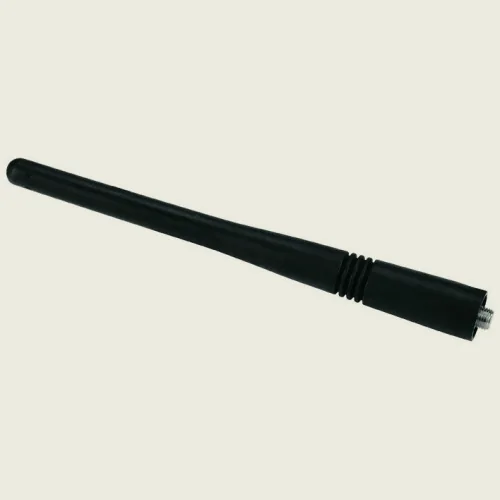
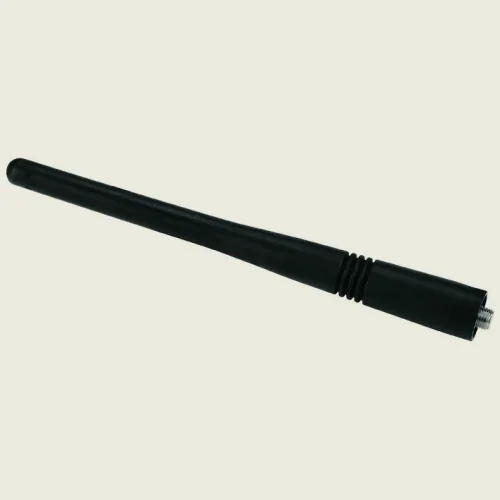
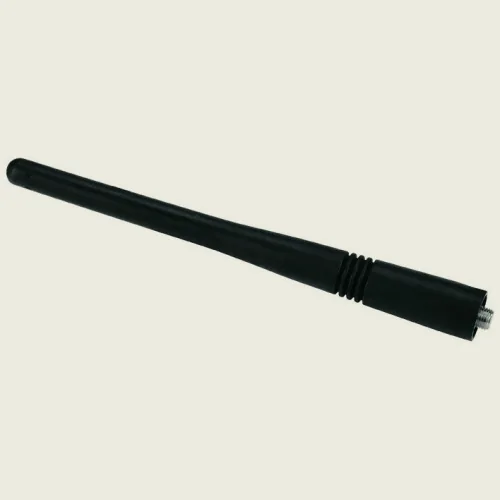
ATV-16A and ATV-16C: handheld VHF antennas for your specific area 136-174 MHz
Task: the antenna to your frequencies, not “all VHF at once”
Handheld two-way radio operates on specific assigned frequencies, rather than the entire range at once. And the antenna to it should be chosen just as accurately: the antenna tuned to your range, in real work gives much more broadband, which stretches itself to 136-174 MHz as a whole. The Vertex ATV-16 range solves this problem with two models: ATV-16A for the lower portion 136-150 MHz and ATV-16C for the upper portion 162-174 MHz. Both are in stock - two sets each.
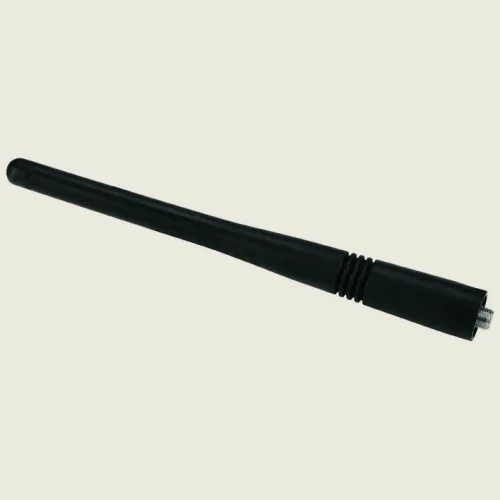
What are the ATV-16A and ATV-16C antennas?
Both are factory handheld Vertex Standard antennas with a threaded connector on which the standard portable is attached: it is not an adapter and not an adapter that add losses, but a full-fledged emitting element. The ATV-16A is configured at 136-150 MHz, the site where forestry and agricultural enterprises, suburban and departmental networks usually operate. The ATV-16C is configured on 162-174 MHz, a segment of industrial, transportation and commercial networks. Customization to a narrow area gives a smoother recoil inside it and a better range at your frequencies.
Why a narrow antenna wins over broadband
A broadband antenna must operate from edge to edge of the range, and at each specific frequency it is a compromise: somewhere gives acceptable, somewhere weak. The antenna, configured for one area, inside this area holds the best CSV and gives more power to the air. In practice, this means a confident reception where the broadband antenna is already “hrizzling”: at the edge of the zone, behind the overpass, in the lowlands. If the frequencies of your network are in the same area, the narrow antenna is more correct.
Replacement without tool
Both antennas are placed with your hands on the standard two-way radio connector in a few seconds: twisted to the point - ready, nothing needs to be disassembled and soldered. This is important for the park, where the same two-way radio goes on shifts: a spare antenna in the case solves the problem with the damaged in an hour, without a trip to the workshop. It is enough for an employee to get a new antenna and screw it in on his own.
How to know which of the two is yours
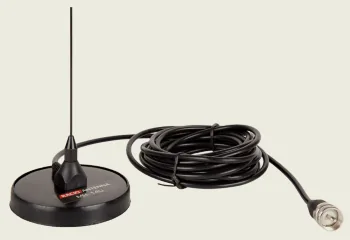
You only need to know what frequency your network is running. If the assigned frequencies are up to 150 MHz, take the ATV-16A, if the assigned frequencies are from 162 MHz and above, the ATV-16C. If the frequencies lie exactly between the sites or the park works on both - write us the frequencies, tell us which antenna will close your case, or propose to divide the park into two models. This is the same principle as the MR-14U’s technical guide for auto-antennas: selection always starts with frequencies, not a catalog.
How to add a handheld package
Handheld two-way radio should be added HS-44C headset work without hands and PMAE4033 antennaIf the park has a Motorola GP340 at 300-340 MHz. Positions available in the block below.
How to order
Write to e-mail the assigned frequencies or models of two-way radio and the desired amount - we will respond within a working day with the price, availability and delivery time. We send all over Russia and Kazakhstan by any transport company, we send closing documents on the day of shipment.
More technical guide
- MR-14U Magnet Autonomous Antenna: Communication for a Machine Without Drilling a Roof
- Hand microphone GMN6146: factory remote microphone for vehicle-mounted two-way radio
- MDPMMN4027 IP57 for rain and wind
- HS-44C Hidden Carry Headset: How Security Takes Calls Without Hiding Two-way Radio
- HNN9009 battery for GP340: second battery for long shift and frost
- GP340 cases: two-way radio protection that works in the field, not in the window
- All guides →